
The Ministry of War Assigned Java Rhino Will Not Be Moved, Second Habitat Still Caused
 Arroyan Mu’Arif Billah
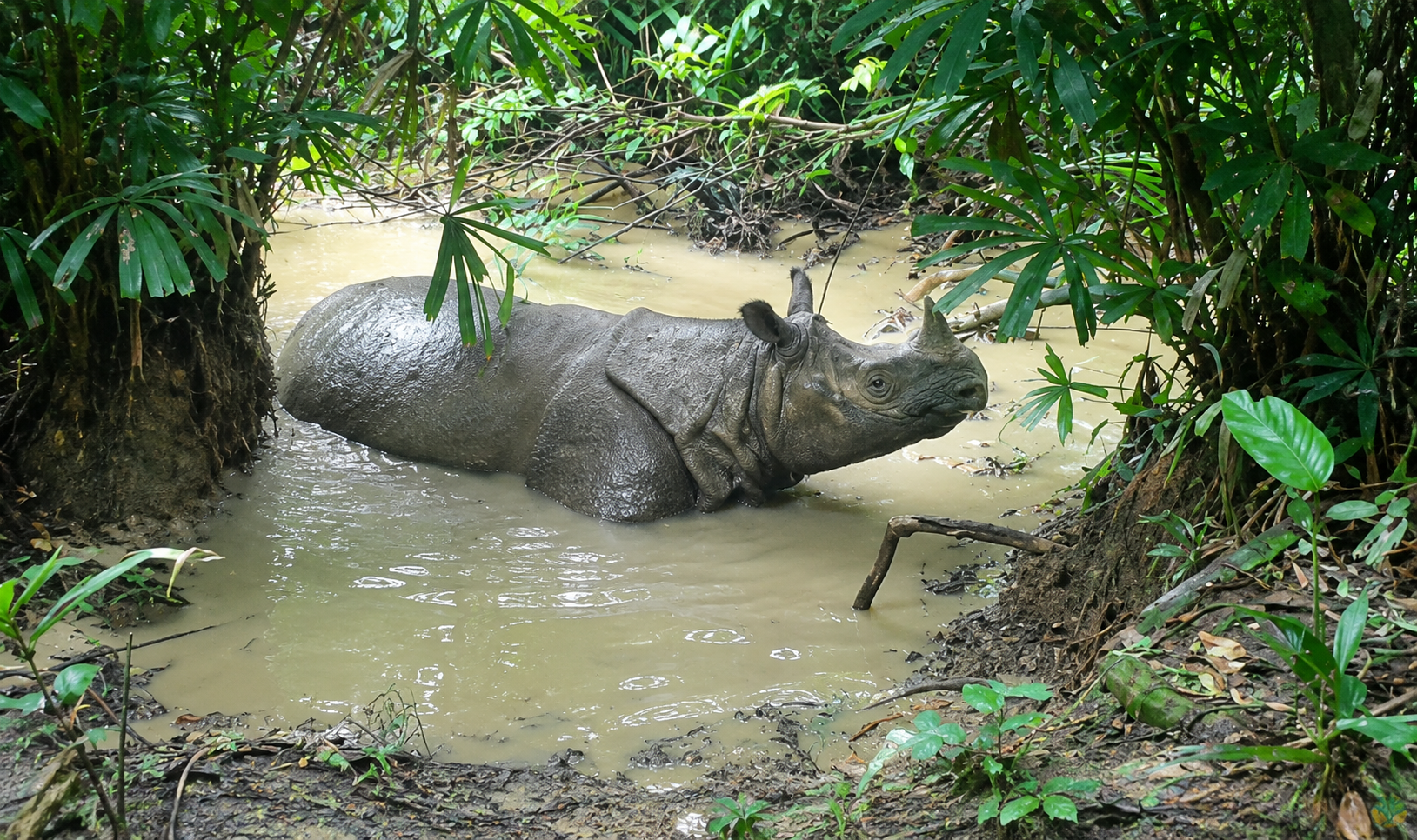
El John News, Jakarta – The government has not made a decision to move Java Rhino (Rhinoceros sondaicusFrom his original habitat at the Kulon End National Park, Banten. The second habitat development proposal, including the possibility of turning Purwo National Park into an alternate location, is still in the poll stage and requires a thorough scientific study.
The Ministry of Forest confirms that the safety of Java Rhino and its natural habitat remains a top priority. Every conservation policy must be based on scientific evidence, ecological consideration, and expert recommendations, not hasty decisions.
The head of the Bureau of Public Relations and Foreign Coalition of the Ministry, the personal Ristoto, says the government is committed to maintaining the sustainability of the endangered species at once making sure the Kulon End ecosystem remains protected.
"The government's focus is to maintain the preservation of Java Rhino and its complete habitat. Every conservation move must give a real benefit to the species's survival and maintain the protection of the Kulon End, "firmly Ristanto in its official description.
He explained, as of right now, that there are no technical decisions or documents about animal transfer. The development of the second habitat is still a long-term conservation concept.
That is, there is no location yet, the number of rhinos that will be moved, the transfer method, or the execution schedule. The whole aspect can only be discussed if the results of the study show that the steps are necessary and possible.
"At this stage, the idea still requires paving and not yet being poured into the moving engineering plan, including location enforcement, individual numbers, methods, or the time of execution. Each step further will be based on the results of scientific studies, expert recommendations, and zoning of the region management, "the Ritianto word.
Purwo's Alas must pass Ethological and Security Exhortation
In the second habitat poll, the government doesn't just consider land availability. It became one of the most important factors to ensure that alternative areas were truly able to sustain Java Rhino's life in the long run.
A number of aspects that need to be examined include habitat support, availability and sustainability of resources and water, potential spread diseases, threat of natural disaster, to the safety of the areas of various distractions.
In addition to ecological factors, long-term readiness and social conditions around the region have also been of concern. People's involvement is rated important so that conservation efforts can go on and get the support of the environment.
So it's likely to make the second habitat a transfer site. All requirements must be proven through adequate research and risk assessment.
"The location selection must be based on scientific evidence and adequate risk assessment. Animal safety and habitat skills to support a healthy and sustainable population are the primary considerations, "clear Ritianto.
If the next study supports the formation of a second habitat, the government will also apply a strict selection of individual Javan rhinos who are potentially the population of founders.
Those selections will consider biological factors, from health, age, gender, genetic diversity to individual reproductive capabilities.
This move is necessary for a new created population to have the opportunity to breed healthy and sustainable, without disturbing the survival of the population that still stands at the edge of the Kulon.
"The goal is to establish a sustainable population of founders, keeping the population at the end of the Kulon, "plus.
The main power of the Indonesian Government Communications Agency (Bakom) RI), Muhamad Hidayat, also confirmed that the technical decision-making authority of conservation is fully in the hands of the Ministry of Forest by considering the recommendations of experts.
According to him, the end of the Kulon remains a major habitat to maintain. Meanwhile, the Purwo Alas can only be considered an alternative if all its ecological requirements and its security aspects have been proven to meet the standard of conservation.
"The end of the Kulon remains the main house of Java Rhino and must remain guarded. The new Purwo level can be considered a second habitat if the entire ecological and security requirements are proven through scientific studies. Without it, the transfer wouldn't have done, "Hidayat-law.
Population Less than 100 Tails, Second Habitat So Long Term Agenda
The idea of the second habitat development of Java Rhino is not actually a new issue. The plan has been part of a long-term conservation discussion since the 1980s.
A number of areas, such as Mt. Honje and Cimengh, have also been in alternative studies to support the expansion of the Indonesian endemic species.
The Urgention of this subject is not regardless of the population conditions of the very limited Java Rhino. An estimated less than 100 remaining individuals and entirely concentrated in one region, the Kulon End Peninsula.
Such conditions pose a great risk to the survival of the species. Dependencies in one habitat make the entire population potentially impacted when there is a massive natural disaster, like a tsunami in Sunda Strait and Krakatau Mountain activity.
In addition to catastrophic threats, the limitation of population space also raises the issue of genetic diversity. Isolate the population can increase the risk of inbreeding or inhealingwhich is called 58.5 percent.
That genetic vulnerability could potentially affect the quality of reproduction and species's ability to survive the change in environment and disease.
Therefore, the existence of the second habitat is seen as one strategic option to reduce the risk of extinction due to dependency on one location. However, these steps must be taken very carefully so as not to cause new threats to the animals.
The back rhythmic states that additional habitat development doesn't mean that the government is reducing attention to the edge of the Kulon. Instead, both approaches are designed to complement each other in strengthening the protection of Java Rhino.
"The protection of the Kulon End and the second habitat poll are two complementary conservation efforts. Kulon tip remains to be guarded as the main habitat of Java Rhino, while any additional population development opportunities are carefully prepared and responsible, "bright.
Second Habitat Departure is related to Golden Mine
In the midst of the second habitat, there was speculation that connected the plan to the alleged gold mining potential in the edge of the Kulon.
In response to the issue, the Ministry has asked the public not to rush to draw conclusions or connect to two unproven issues that have no connection.
The systemesto confirms that information regarding mineral potential should refer to official data that can be verified via authority agencies. That information cannot be based on the conclusion that the second habitat development is part of a mining agenda.
"Information regarding alleged mineral potential needs to be carefully supplied and refer to official data that can be verified by the authorities. That information can't be as basic as the second habitat development agenda.
The clarification is also delivered by the Ministry of Energy and Mineral Resources (ESDM). Minister of the Ministry ESDM Dwi Orcia, states that the Kulon End National Park is not a mining area.
ESDM indicates that there are no mining permits being published in the surrounding areas of parks and waters. The same explanation was delivered by the head of the Ministry of Geology Agency ESDM Lana Saria.
The birth of Java Rhino Children So Good News from the End of the Kulon
In the midst of a long-term conservation strategy, happy news comes from the Kulon End National Park. The ministry announced the birth of one new individual Java rhinoceros from a host named Dany.
That birth has been an additional importance for the survival of species that are on the verge of extinction. The rhinoceros' son was first identified through the frame camera footage (trap camera) on October 10, 2026.
When we first monitored it, Java Rhino's son was estimated to be between one and two months old. His condition was reported healthy and appears active following his parent.
The head of the National Park Hall at the edge of the Kulon, Ardi Andono, called Dany a Java Rhino parent who has a pretty good reproductive productivity in the Kulon End Peninsula area.
"Dany is listed as one of the productive hosts of the Kulon End Peninsula, "reveal Ardi.
The newborn rhinoceros' son was the fifth birth for Dany. The record of this reproduction became one of the most positive developments in trying to maintain the Java Rhino population through a natural development process.
The success was also a crucial indication that the various safe measures in the Kulon End region continued to yield results. The attempt includes the habitat's security from poaching, expediting the population periodically, restoring the ecosystem, and controlling many ecological threats.
Besides, the government continues to strengthen management Javan Rhino Study and Conservation Area (JRSCA) inside the Kulon End National Park area. The result of monitoring and evaluation of the region will be the reperfecting of the Java Rhino strategy forward.
The Ministry of Justice ensures that the rare animal protection of Indonesia's pride will continue to be transparent and involved in various interests, starting with experts, conservation partners, local government, to communities around the region.
For the government, keeping Java Rhino not only about maintaining the existence of one species, but also ensuring that the ecosystem that became its home remains sustainable. Therefore, every conservation policy must prioritize the safety of the animal, continuity of habitat, and the future of the Java Rhino population in Indonesia.

Author
Arroyan Mu’Arif Billah
El John Media's editorial team focused on covering Indonesian tourism, business, and lifestyle.